BlogSoap
How do you make your own shampoo bar?

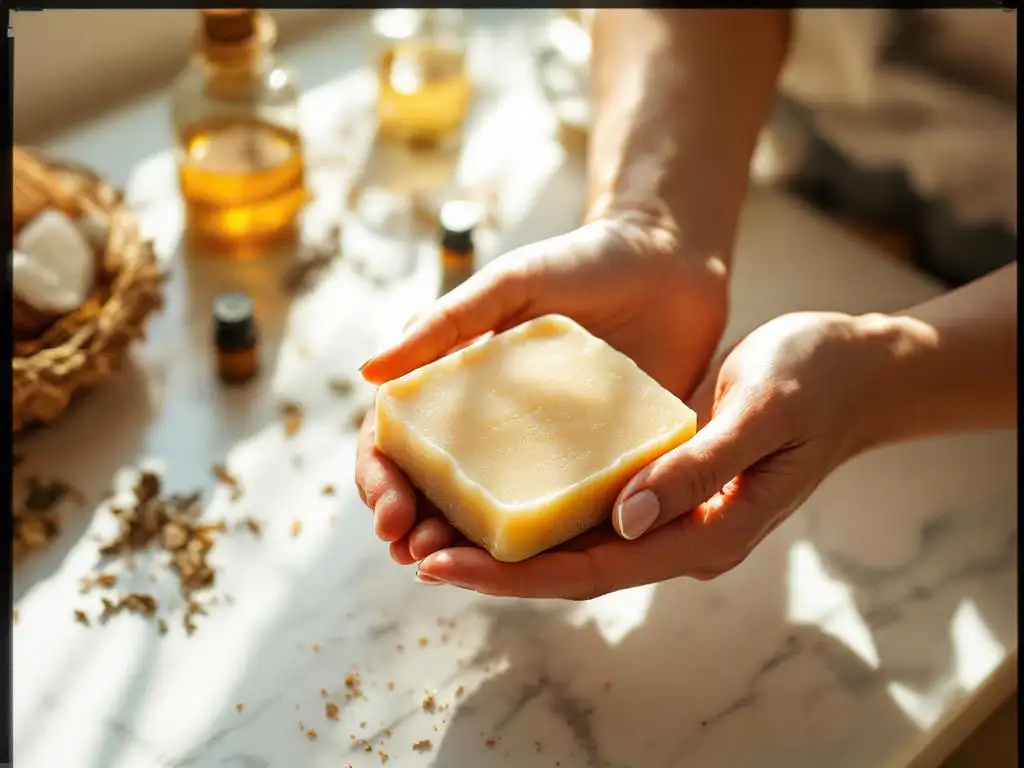
Making a shampoo bar at home is an eco-friendly way to create your own hair care products. You’ll need basic ingredients, such as sodium hydroxide (lye), natural oils, and any additives that suit your hair type. The process requires care and the right proportions, but results in a sustainable shampoo bar that lasts for months and reduces plastic waste.
What ingredients do you need to make a homemade shampoo bar?
To make your own shampoo bar, you’ll need some essential base ingredients and optional additives. The main ingredients are sodium hydroxide (lye), natural oils, and water for the saponification process.
The main basic ingredients are:
- Sodium hydroxide (NaOH) – available at drugstores or from online suppliers
- Coconut oil – creates lather and has a cleansing effect
- Olive oil – adds mildness and nourishment
- Shea butter – provides hydration and protection
- Distilled water – for dissolving the lye
You can add specific oils depending on your hair type. Almond oil works well for dry hair, while jojoba oil is ideal for oily hair. Avocado oil and macadamia oil provide extra nourishment for damaged hair.
When purchasing ingredients, pay attention to quality. Choose cold-pressed oils with no additives and make sure to use cosmetic-grade sodium hydroxide. Store all ingredients in a cool, dry place until use.
How do you make a shampoo bar at home, step by step?
Making a shampoo bar requires careful preparation and following safety precautions. Always put on protective clothing and gloves and wear safety goggles before working with lye.
Follow these steps for best results:
- Measure all ingredients accurately using a digital kitchen scale
- Dissolve the sodium hydroxide in distilled water (always add the lye to the water, never the other way around)
- Heat the oils to 40–50°C in a heat-resistant pan
- Let the lye solution cool to the same temperature as the oils
- Slowly pour the lye solution into the oils while stirring constantly
- Blend with a hand blender until “trace” forms (a pudding-like consistency)
- Pour the mixture into silicone molds
- Let it cure for 24–48 hours before removing it from the mold
Temperature control is crucial for a good shampoo bar. Temperatures that are too high can damage the oils, while temperatures that are too low result in uneven mixing. Allow 4–6 weeks for curing before using the shampoo bars .
Why choose a homemade shampoo bar?
A homemade shampoo bar gives you complete control over the ingredients and is often more cost-effective than commercial alternatives. You know exactly what’s in it and can tailor the formula to your specific hair type and preferences.
The main advantages are:
- Cost savings – one shampoo bar lasts 2–3 times longer than a bottle of shampoo
- Environmentally friendly – no plastic packaging and less transportation
- Ingredient check – no sulfates, parabens, or artificial additives
- Personalization – tailored to your hair type and sensitivities
- Travel-friendly – compact and won't leak in your suitcase
Homemade shampoo bars are particularly suitable for people with sensitive scalps or allergies. You can avoid irritating ingredients and use natural alternatives that are gentle on your skin.
Compared to traditional liquid shampoos, homemade shampoo bars contain no water, making them more concentrated and efficient. This means you need less product per wash, and the bar lasts longer.
What common mistakes should you avoid when making shampoo bars?
The most common mistake when making shampoo bars is using the wrong ratio of lye to oils. This can result in a bar that is too soft and dissolves quickly, or a bar that is too hard and irritates the skin.
Avoid these common beginner mistakes:
- Temperature issues – excessive temperature differences between lye and oils
- Insufficient mixing – not mixing long enough to form a trace
- Improper storage – an environment that is too humid during the curing process
- Incorrect measuring methods – measuring ingredients by volume instead of weight
- Rushing – skipping or shortening the curing process
To avoid problems, it’s important to use a reliable lye calculator. It calculates the exact amount of sodium hydroxide needed for your specific oil blend.
Store your shampoo bars in a well-ventilated area, away from direct sunlight, while they cure. Too much moisture can cause white mold, while too much heat can cause the oils to go rancid. Be patient with the curing process—this is essential for a mild, long-lasting shampoo bar.
How does Blokzeep contribute Blokzeep sustainable hair care?
Blokzeep a professional solution for anyone who wants the benefits of shampoo bars without having to make them themselves. Our handmade shampoo bars are formulated by experts and tested to ensure optimal results for different hair types.
The benefits of our professionally crafted bars:
- Specialized formulas for blonde, oily, or fine hair
- Consistent quality thanks to experienced craftsmen
- 100% natural ingredients, free of sulfates and parabens
- Cradle to Cradle-certified, plastic-free packaging
- Carbon-neutral transportation within Europe
- Each bar saves 90 grams of plastic and reduces water consumption by 80%
Our shampoo bars contain high-quality oils such as coconut oil, shea butter, almond oil, avocado oil, and macadamia oil. These are carefully selected for their nourishing properties and sustainable sourcing. All products are 100% vegan and contain no palm oil.
Discover our collection of sustainable shampoo bars and experience the convenience of professional-quality products. Contact us for personalized advice on the best shampoo bar for your hair type and start using plastic-free hair care today.