


BlogSoap
Microplastics in shampoo – What do they do?

Microplastics in shampoo – what do they do?
Did you know that some shampoo bottles aren’t just made of plastic on the outside, but also contain tiny pieces of microplastic on the inside? Why is this found in some shampoos, and what are the consequences? We’d be happy to explain!
Why are there microplastics in shampoo, and what effect do they have?
Shampoo can contain both various types of microplastics and microbeads. Microbeads are tiny spheres that have a cleansing and exfoliating effect. Fortunately, most major manufacturers have now stopped adding microbeads to their products because it has become clear that they are highly harmful to the environment. Microbeads are therefore rarely found in products sold in the Netherlands anymore, but many personal care products still contain many other types of microplastics. Why do manufacturers still choose to use microplastics? These are the main reasons microplastics are found in shampoo:
- To make the shampoo easier to rinse out
- To clean the scalp more thoroughly
- Plastics have been added to personal care products and cosmetics since the 1970s, which is why manufacturers are finding it very difficult to adjust their formulas
- Shampoo containing microplastics can have a fixing effect on the hair, causing it to stay in place
- It stabilizes the formula and makes the shampoo lather more

What microplastics are found in shampoo?
Of course, the ingredient list on your shampoo and conditioner doesn’t literally state that they contain microplastics. That’s why we’ve identified which types are commonly found in your shampoo. When it comes to microplastics, you can distinguish between ingredients that are considered microplastics and ingredients about which little is known regarding whether or not they fall under the category of microplastics. Research has led to skepticism regarding this latter category. To help you check your labels yourself, we’ve listed the most common microplastics found in products like shampoo:
- Polyethylene (PE)
- Polyethylene terephthalate (PET)
- Nylon (PA)
- Polypropylene (PP)
- Polymethyl methacrylate (PMMA)
- Dimethicone
- Cyclomethicone
- Acrylates
- Copolymers
- Methylchloroisothiazolinone
- Methylisothiazolinone
- Paraffin Waxes
What microplastics are found in shampoo?
Of course, the ingredient list on your shampoo and conditioner doesn’t literally state that they contain microplastics. That’s why we’ve identified which types are commonly found in your shampoo. When it comes to microplastics, you can distinguish between ingredients that are considered microplastics and ingredients about which little is known regarding whether or not they fall under the category of microplastics. Research has led to skepticism regarding this latter category. To help you check your labels yourself, we’ve listed the most common microplastics found in products like shampoo:
- Polyethylene (PE)
- Polyethylene terephthalate (PET)
- Nylon (PA)
- Polypropylene (PP)
- Polymethyl methacrylate (PMMA)
- Dimethicone
- Cyclomethicone
- Acrylates
- Copolymers
- Methylchloroisothiazolinone
- Methylisothiazolinone
- Paraffin Waxes
Are you looking for a more comprehensive list of ingredients you’d prefer to avoid? Then check out Beat the Microbead!
Is shampoo containing microplastics harmful?
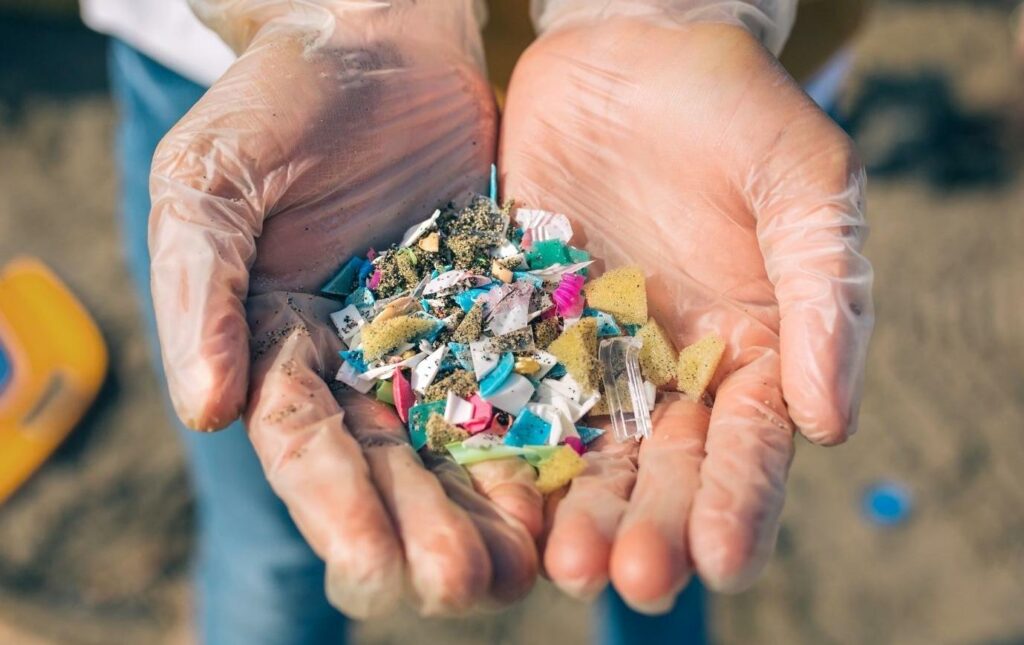
Shampoo containing microplastics is particularly harmful to the environment because the microplastics in the shampoo flow down the drain with the water while you shower. Often, the microplastics aren’t caught by the filters, so they end up in the environment. Unfortunately, it’s also very difficult to get rid of them. It’s still unclear how harmful microplastics are to our health. Ingesting plastic is obviously not a pleasant idea, but too little is known about what the actual consequences are. Several studies have been conducted, but no firm conclusions can yet be drawn from them. However, there is speculation that ingesting microplastics could cause long-term inflammation.
Shampoo without microplastics
Based on our little study above, we can conclude that shampoo in a plastic bottle isn’t good for the environment. That’s why our shampoo and conditioner bars are, fortunately, completely (micro)plastic-free, both inside and out! By using a shampoo or conditioner bar, you save 90 grams of plastic that won’t end up in the ocean. Did you know that even our packaging is biodegradable? Take a look at our products now and switch to a completely plastic-free routine—good for you and our planet!